Our first batch of seeds has been planted!
Community ideas gathering support.
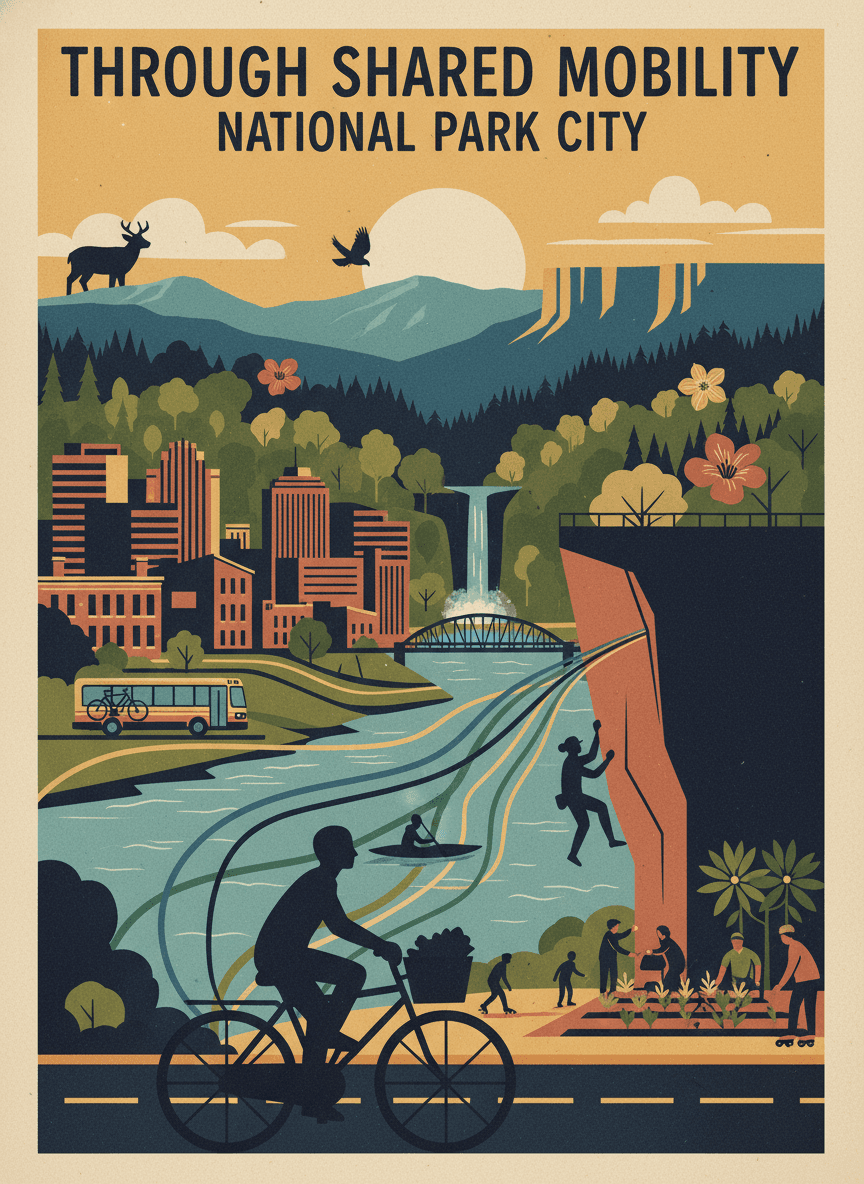
Bike Chattanooga should be recognized not only as a transportation system, but as an extension of Chattanooga’s park system. The “Sphere of Contentment” expands the traditional park experience beyond the boundaries of parks and greenways by using shared bicycles to connect people to recreation, public space, neighborhoods, and local businesses. A park is not simply a place—it is a feeling of health, freedom, movement, and connection. Shared bicycles allow that feeling to move through the city. When someone rides from Coolidge Park to Walnut Street Bridge, along the Tennessee Riverwalk, or between Miller Park and St. Elmo, they are already participating in the park experience. This Seed proposes strategic expansion and repositioning of Bike Chattanooga stations near parks, trailheads, libraries, affordable housing, and neighborhood commercial centers so the bicycle becomes a gateway to health, recreation, and economic vitality. Cities have long understood the value of parks. Parks are where people go to breathe, to move, to gather, and to reconnect with both nature and community. They improve public health, support mental well-being, increase surrounding property values, attract visitors, and strengthen the social fabric of neighborhoods. Yet the traditional definition of a park is often limited by geography—a fenced green space, a trail corridor, a riverfront plaza, or a recreation field. The “Sphere of Contentment” proposes a broader idea: what if the benefits of a park did not begin at the park entrance, but instead extended outward into the city itself? The concept of the Sphere of Contentment recognizes that the true value of a park is not merely its land area, but the emotional and social condition it creates. A park produces comfort, freedom, joy, calm, physical activity, and a sense of belonging. These qualities can exist beyond lawns and trees. They can be created anywhere people experience movement, safety, beauty, and connection. In this sense, a park is not simply a place—it is a condition. Bike Chattanooga provides an opportunity to expand that condition throughout the urban environment. A shared bicycle transforms transportation into recreation and turns ordinary trips into experiences of wellness and discovery. The moment a person unlocks a bicycle near the Tennessee Riverwalk, Miller Park, Coolidge Park, Renaissance Park, or along the South Chickamauga Greenway, they are no longer simply traveling to a destination. They are already inside the park experience. Cycling changes how people engage with the city. Unlike driving, where the experience is enclosed, fast, and disconnected, riding a bicycle places the individual directly within the public realm. Riders feel the air, hear the city, notice storefronts, public art, trees, water, and neighborhood life. They move at a human pace. They can stop easily, linger longer, and discover places they would otherwise pass without notice. The trip itself becomes restorative. This is where the Sphere of Contentment becomes an economic development strategy. Traditional park investments are justified by measurable outcomes: increased tourism, stronger commercial districts, improved property values, and better public health outcomes. Bike share amplifies these same returns by extending the functional reach of those parks. A visitor staying downtown can move from the Walnut Street Bridge to the Bluff View Art District, from the Aquarium to St. Elmo, or from the Southside to the Riverwalk without needing a private vehicle. The bicycle becomes the connective tissue between destinations, allowing individual parks and attractions to operate as part of a larger unified system. Instead of isolated amenities, the city becomes a network of connected experiences. This network effect matters. A single park has value, but multiple destinations connected by easy, enjoyable mobility create exponentially greater value. Restaurants benefit because cyclists are more likely to stop spontaneously. Retail districts gain because riders experience storefronts directly rather than passing at forty miles per hour. Event spaces become more accessible without requiring additional parking infrastructure. Residential neighborhoods near stations become more desirable because access to recreation expands beyond proximity to a single park. The Sphere of Contentment reframes bike share not as a transportation expense, but as public realm infrastructure. It is as much a parks investment as a mobility investment. This distinction is important because many cities still evaluate bike share systems too narrowly—focusing only on transportation metrics such as commute trips or mode shift percentages. While those measures matter, they fail to capture the broader civic value of shared mobility. Bike Chattanooga succeeds not only because it helps someone get to work, but because it helps people experience Chattanooga differently. It turns a lunch break into a riverfront ride. It allows a family visiting the city to experience North Shore and downtown without parking twice. It gives residents a healthy and affordable way to reconnect with their neighborhoods. People riding bicycles are typically happier, healthier, and more socially engaged. This is not merely anecdotal; it reflects the basic psychology of active movement. Physical activity improves mood and reduces stress. Outdoor movement improves mental clarity. Human-scale mobility increases social interaction and community awareness. People on bicycles wave to one another. They stop to talk. They become participants in public life rather than observers passing behind glass. In planning terms, the bicycle creates social permeability. That permeability strengthens equity as well. Parks should not be exclusive destinations accessible only to those with cars, free time, or disposable income. Shared bicycles create affordable access to recreation and mobility for residents across income levels. A station near a transit stop, affordable housing development, library, or neighborhood commercial center allows the park experience to reach more people without requiring new land acquisition or major capital expansion. It makes public space more democratic. This is especially relevant in Chattanooga, where decades of investment in the Tennessee Riverwalk, the Walnut Street Bridge, the Downtown Shuttle, and riverfront redevelopment have already established strong anchors of public life. Bike Chattanooga has the ability to connect these assets into a single behavioral system. Instead of asking people to choose between driving, walking, transit, or recreation, the city can offer an integrated experience where mobility and enjoyment are the same activity. The strongest opportunities lie at these intersections: park to greenway, greenway to neighborhood, neighborhood to commerce, commerce to transit. Every bike station near a trailhead, plaza, or public gathering space becomes a gateway. It extends the radius of comfort around that place and enlarges the zone where people choose to stay, spend, and participate. That radius is the Sphere of Contentment. From a policy perspective, the next step is to intentionally plan for this sphere. Station placement should prioritize not only transportation demand but emotional geography—where people want to linger, where public life is strongest, and where economic spillover can be maximized. Partnerships between parks departments, tourism agencies, transit operators, and local businesses should treat bike share as shared infrastructure rather than a standalone program. Success should be measured not only in trips, but in dwell time, visitor circulation, event access, small business impact, and neighborhood vitality. The long-term vision is simple but powerful: a city where the feeling of being in the park does not stop at the park gate. A person riding from Coolidge Park across the Walnut Street Bridge should feel that continuity. A resident leaving St. Elmo for the Riverwalk should feel that continuity. A visitor moving from Miller Park to the Aquarium to the Tennessee Riverpark should feel that continuity. The city becomes not a collection of separate destinations, but a continuous landscape of movement, health, and belonging. The bicycle makes that possible because it is uniquely positioned between transportation and recreation. It is efficient enough to connect destinations, yet slow enough to preserve experience. It supports economic development without demanding expensive parking structures. It improves health without requiring formal programming. It activates streets without new buildings. It expands parks without purchasing more land. This is why Bike Chattanooga should be understood not only as a bike share system, but as an urban development tool. The Sphere of Contentment is ultimately about redefining success in city building. The goal is not simply moving people faster. It is helping people live better. It is creating cities where health, happiness, commerce, and community reinforce one another. It is designing places where the journey itself adds value. In that city, the bicycle is not just transportation. It is the park in motion.
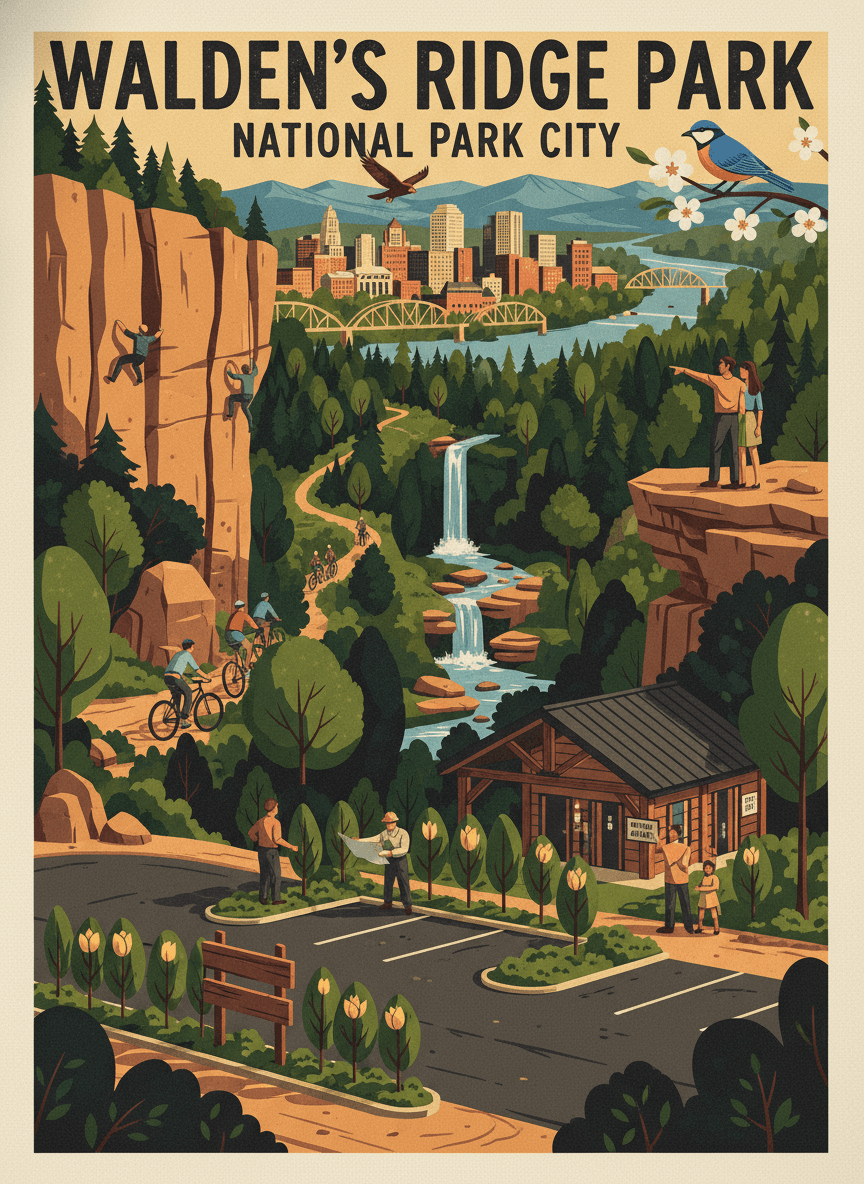
Walden's Ridge is a world class riding destination, but doesn't have bathrooms or park amenities at the base. Let's transform the existing trailhead into a community anchor that serves as a gateway to the mountain. The entry experience begins with a redesigned parking lot that flows into a landscaped perimeter, where a dense corridor of native trees along Reeds Lake Road acts as a living screen. This natural buffer dampens traffic noise and separates the park from the neighborhood, while permanent bathrooms and a grassy play area near the historic Post Oak preserves the tree as a landmark. From this central hub, the improved golf trails are integrated into a cohesive path system, offering clear, accessible connectivity for hikers and strollers to navigate the expansive field safely away from high-speed bike traffic. At the heart of this expansion is a Skills Center designed as a deliberate progression ladder to bridge the gap between a toddler’s first roll and the ridge’s legendary downhill runs. We will implement a "micro-to-mountain" flow: starting with a flat-ground toddler balance zone, progressing to a low-profile pump track for momentum control, and culminating in a wood obstacle course that mimics the technical rock gardens and narrow skinnies found at the summit. This gradient allows riders to master weight distribution and cornering in a low-consequence environment, ensuring that by the time they head up the hill, they have the technical skills required for world-class downhill terrain. To mirror the world-class bouldering found higher up the ridge, the base area will feature a bouldering skills zone specifically for education. This includes an easy climbing wall and a series of climbing boulders designed with low fall heights and specific "problem-solving" routes to teach essential footwork and grip. By providing a controlled environment for vertical progression, we ensure that the park’s climbing culture is as accessible as its cycling culture, allowing beginners to build the strength and confidence needed to tackle the massive sandstone boulders located further up the mountain. The plan is rounded out by a natural playground that utilizes the area around the natural spring, creating a tactile, water-integrated play space for families. By using native plants and earthy textures that blend into the existing mountain aesthetic, we create an adventurous environment that reflects the rugged spirit of the Chattanooga community. This synergy of climbing, biking, and nature-based play ensures that the bottom of the hill is not just a transit point, but a destination in its own right—a place where the next generation of outdoor enthusiasts is born.
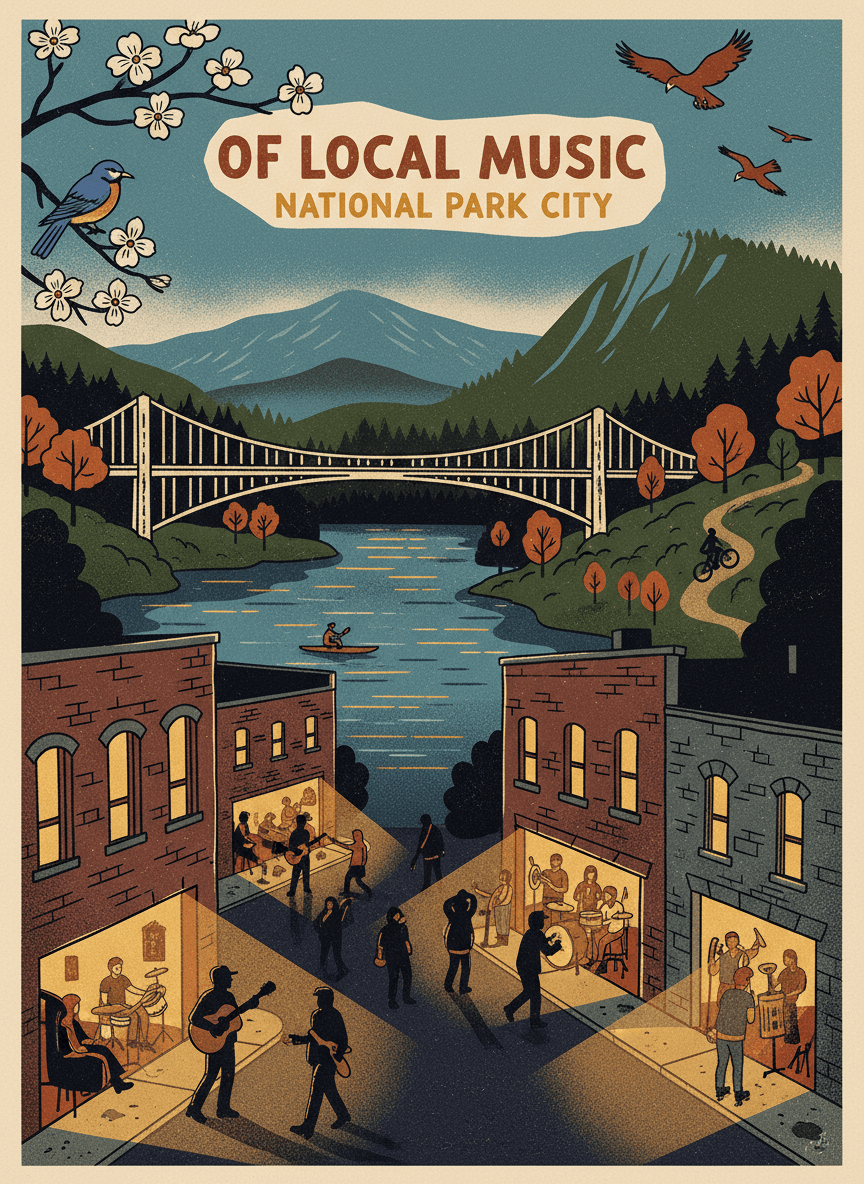
Southish is the un-festival of local music—a Localist take on what a music festival should be. No big stage. No imported headliners. No standing in a field watching from a distance. Instead, Southish happens across 8–10 local venues, featuring musicians who live here, create here, and are connected to this place. You move through neighborhoods, discover new spaces, and experience music up close. Most festivals bring talent in and take money out. Southish does the opposite—investing in local artists, activating local venues, and keeping energy and dollars rooted in our community. It’s built for the people who actually make music happen in Chattanooga. In its first year, Southish will support 70–80 local musicians and bring together over 1,500 people in a format designed to grow and last. It’s not a bigger festival—it’s a better one.
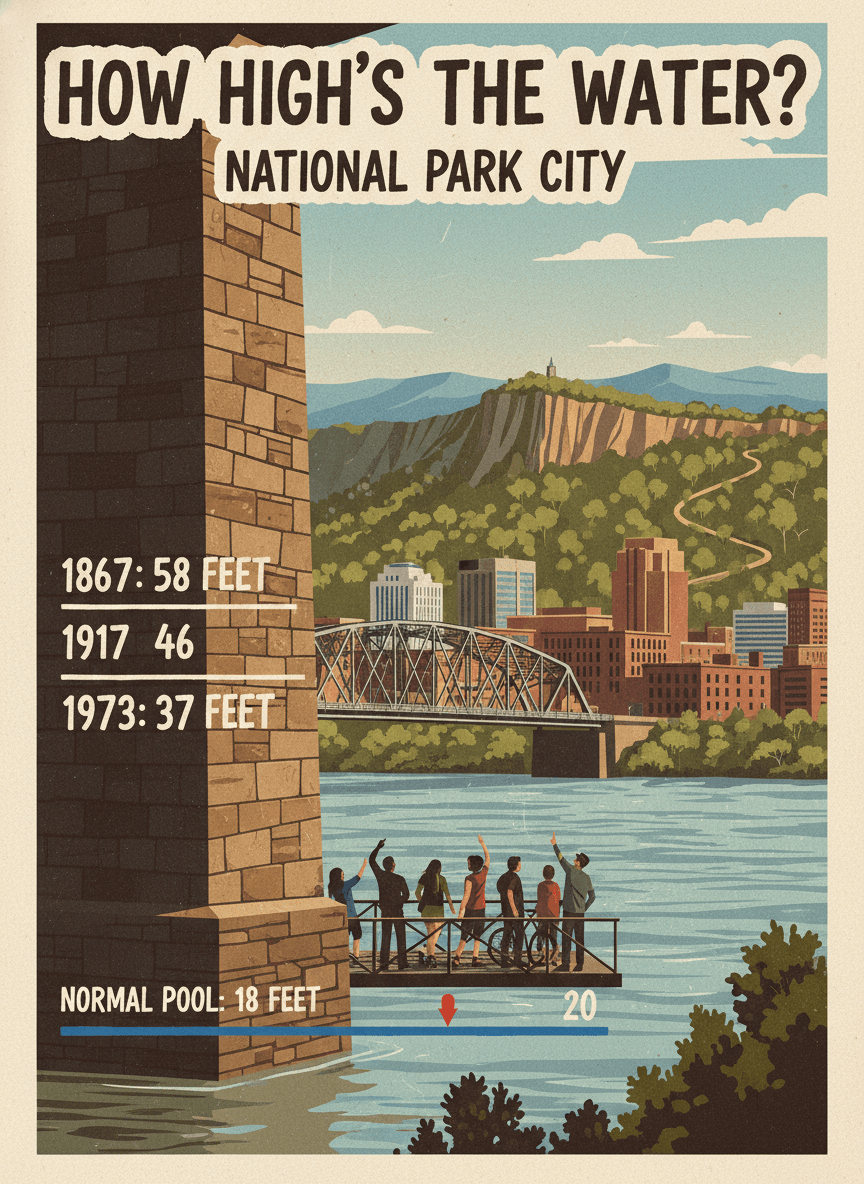
A Market St. Bridge pier marked with historic Tennessee River flood levels visible to visitors on the downtown Riverfront. It should also indicate the normal pool level at downtown. At a glance, the current water level would be evident and the flood history of Chattanooga would be commemorated.
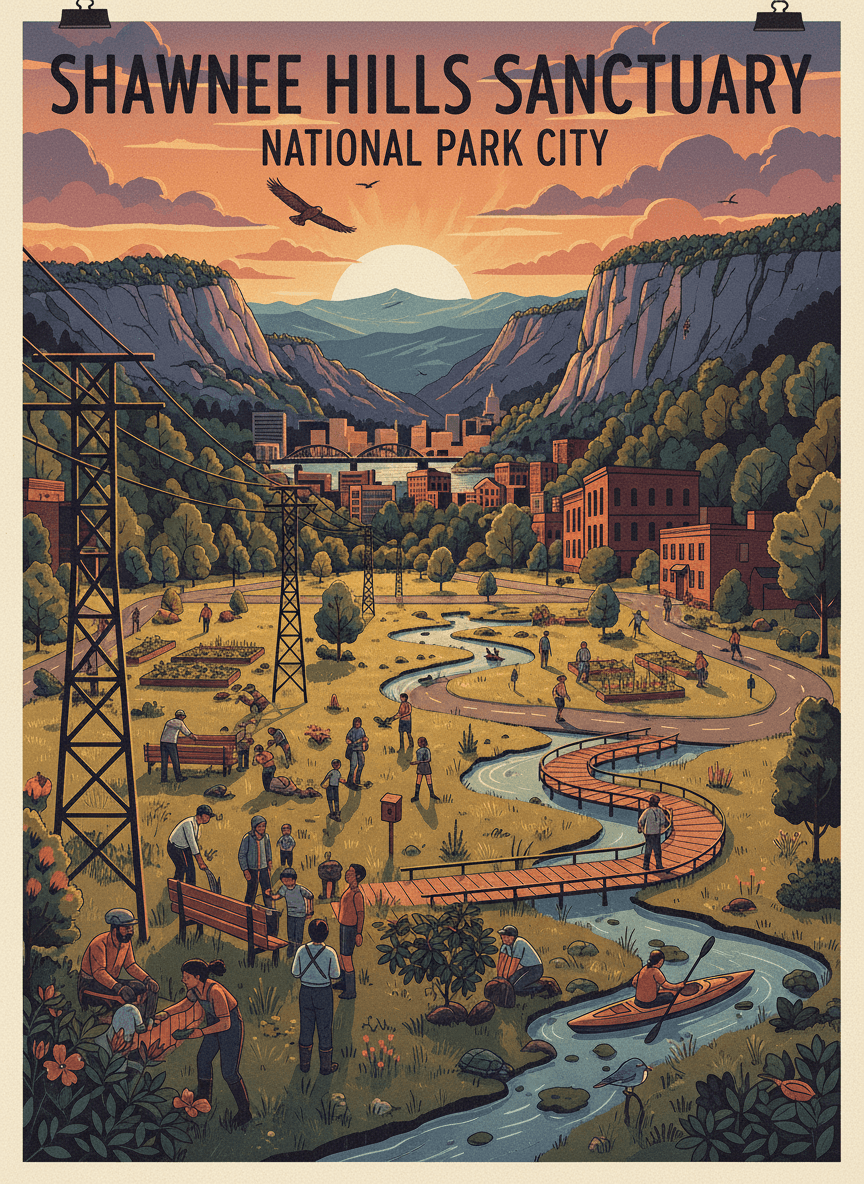
Turning a vacant lot under high voltage lines into a place for people to sit and enjoy the wetland wildlife. Currently, because it is empty and overgrown, it is not inviting. We have zero parks in our area. This would be a great addition to our neighborhood.
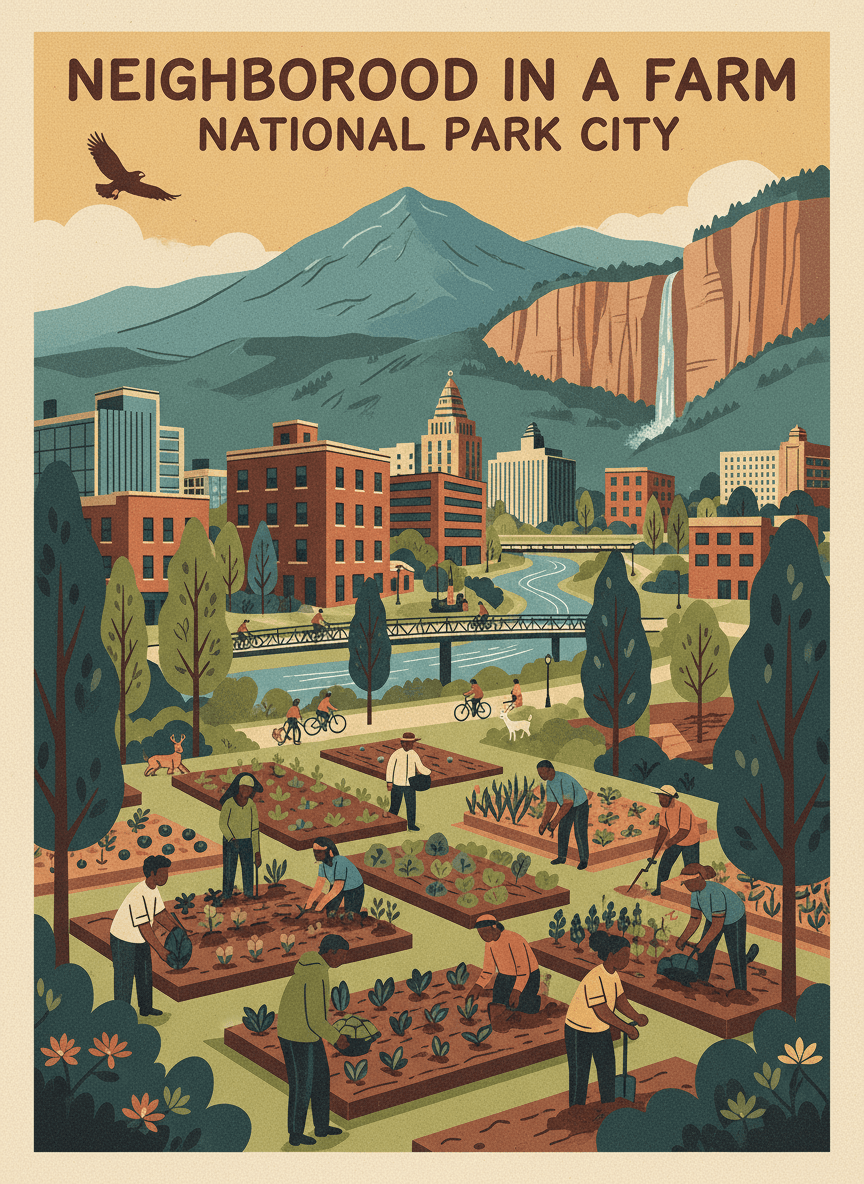
If Chattanooga is being reimagined as a “city in a park,” then Glass Farms can become a “neighborhood in a farm.” Glass Farms is a place rich in culture, history, and community, but it is also a food desert, where access to fresh, nourishing food is extremely limited. This is not a failure of the community; it is a reflection of systemic gaps. And it reveals an opportunity. We propose planting a National Park City Seed: A community-led urban agriculture movement that transforms lawns, vacant lots, and shared spaces into sources of nourishment, education, and connection. THE VISION - Front yards and open lots growing fruit trees and shrubs, and vegetable and herb gardens (maybe even chickens and more) - Neighbors sharing surplus harvests at "crop swaps" - A Glass Farms community market, where residents sell what they’ve grown - Children and adults learning together how to grow food, restore soil, and care for land Inspired by models like Crabtree Farms and the philosophy in the book "Food Not Lawns," and supported by organizations like Chattanooga Urban Agriculture Coalition and others (see below), this initiative aims to relocalize food production at the neighborhood scale. CORE COMPONENTS 1. Community Education & Activation Launch a program through local community centers to: - Teach residents how to grow food in small spaces - Introduce soil health, composting, and seasonal planting - Build excitement and shared ownership 2. Tool Lending Library Create a shared, accessible resource for: - Garden tools - Raised bed materials - Composting supplies This lowers barriers and allows anyone to participate, regardless of socio-economic status. 3. Neighborhood Planting Days Organize regular, community-wide planting events where: - City-wide volunteers and residents work side-by-side - Lawns and vacant lots are transformed into productive gardens - Skills are passed through doing, not just teaching A part-time paid coordinator (or dedicated volunteer) would help organize these efforts. 4. Vacant Lot Activation Explore partnerships with local land-holding entities (such as a potential city or regional land bank, if available) to: - Identify vacant or underutilized lots in Glass Farms - Secure permission for temporary or long-term growing use - Convert these spaces into community garden hubs This step may involve outreach to local leaders or city representatives to map ownership and opportunity. 5. Neighborhood Produce Sharing & Market Culture Beyond growing food, this initiative envisions a culture of sharing and exchange: - Informal crop swaps between neighbors - Seasonal pop-up stands or micro-markets on Glass Street - Eventually, a recurring community farmer-style market centered on locally grown food This responds directly to the current absence of fresh produce in everyday community spaces—and replaces it with abundance. 6. Critical Consideration: Soil Health & Safety A key reality in urban agriculture—especially in historically industrial or disinvested areas—is soil contamination, so this becomes the priority. - Comprehensive soil testing across all sites - Investment in soil remediation strategies, including: raised beds, imported clean soil, and phytoremediation, where appropriate Given the conditions in many Chattanooga neighborhoods, soil work will likely represent a significant portion of the budget—and is essential for ensuring safety and long-term success. BUDGET PRIORITIES (High-Level) - Soil testing and remediation (major component) - Raised beds and soil amendments - Tool library setup - Community programming and materials - Coordination (staff or stipend) THE SEED WE ARE PLANTING: This is more than a gardening project. It is: - a response to food injustice - a reconnection to land and self-sufficiency - a way to build resilience, health, and pride - a model that could ripple into other neighborhoods Glass Farms has deep roots. This initiative—Glass Roots—honors that history while growing something new. FUTURE POSSIBILITIES As the project evolves, potential expansions include: - partnerships with local schools - youth employment programs in urban agriculture - composting hubs - collaborations with city agencies and land banks - scaling into a replicable model for other Chattanooga neighborhoods that are currently in a food desert
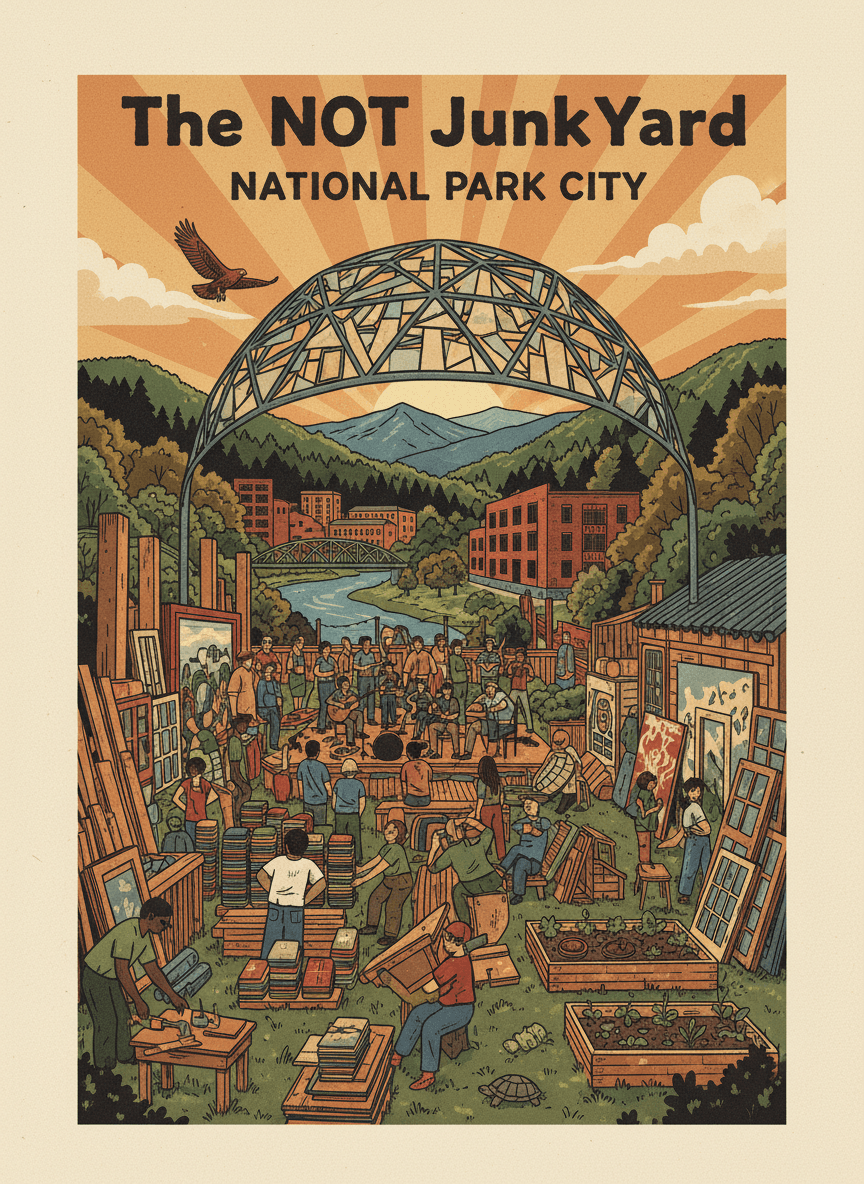
The NOT JunkYard — Concept Proposal A salvage yard people actually want to spend time in. The NOT JunkYard is a hybrid space combining an architectural salvage yard, a creative social club, and a live event venue. Its purpose is practical and measurable: to divert usable materials from landfills while building a culture around reuse, creativity, and community. Every year, large volumes of valuable materials from remodels, demolitions, and deconstruction projects are discarded. Much of this is not waste. It is usable, often high-quality material with years of life remaining. The NOT JunkYard intercepts that flow. ⸻ Material Recovery and Reuse Materials enter the system through: * Partnerships with deconstruction and demolition crews * Direct relationships with contractors * Community and business donations * Optional pickup and logistics support to reduce friction The core principle is simple: We make it easier and more economical to divert materials than to throw them away. Recovered materials are curated and resold at a significant discount to new retail. These are treated as inventory, not scrap. Many items exceed the quality of modern alternatives and offer character and history that cannot be replicated. This creates multiple, compounding benefits: * Reduction in landfill waste * Lower demand for new manufacturing and raw resource extraction * Affordable access to building materials * Unique, story-driven inventory for builders, artists, and homeowners ⸻ Curation and Structure The NOT JunkYard is not an open dump. It is actively curated and organized into two primary layers: Public-Facing Inventory Cleaned, sorted, and accessible materials suitable for resale to the general public, builders, and creatives. Trade and Bulk Zones (Limited Access) Higher-volume or less refined materials available to contractors and professionals at scale. Additionally, select materials from historic structures and unique sources are preserved and highlighted as premium inventory. Curation standards are designed to improve over time as supply and demand patterns become clearer, ensuring the space remains functional, navigable, and engaging. ⸻ A Cultural and Creative Destination The NOT JunkYard transforms a traditionally transactional environment into an experiential one. It is designed as a place where people do not just come to buy materials, but to explore, create, connect, and stay. The space itself is built and continuously evolved using reclaimed materials, making the mission visible and tangible. Core elements include: * A stage and performance area for music, art, and experimental work * Maker spaces for fabrication, building, and hands-on creation * A bar and social environment that encourages gathering and interaction * Markets, events, and regular nightlife programming * A membership structure that fosters community and repeat engagement ⸻ Education and Community Access Education is a core function of the space. Workshops and programming focus on: * Deconstruction techniques * Upcycling and reuse * Practical building and fabrication skills Community organizations are provided access to classroom and workshop spaces at low or no cost, ensuring that knowledge and opportunity extend beyond the core audience. ⸻ Multi-Stream Revenue Model The NOT JunkYard operates on a diversified revenue model: * Salvaged material sales * Bar and beverage program * Event ticketing and venue rental * Memberships * Workshops and educational programming This structure ensures that cultural and experiential revenue streams support and amplify the material reuse mission. ⸻ Founder Experience This concept builds on prior experience developing and operating Makers Square, a creative hub that successfully brought together artists, builders, and entrepreneurs in a shared, culture-driven environment. That project demonstrated the demand for spaces where people can make, collaborate, and belong. The NOT JunkYard expands that model by integrating material reuse with a stronger economic and operational engine. ⸻ Positioning The NOT JunkYard sits at the intersection of: * Resource recovery * Creative culture * Community gathering It combines the utility of a salvage yard with the energy of a creative venue and the accessibility of a social club. ⸻ Closing The NOT JunkYard is not about waste. It is about recognizing value where others discard it. It is a place where materials are reused, ideas are built, and people gather. Not a junkyard. A system. A space. A culture.
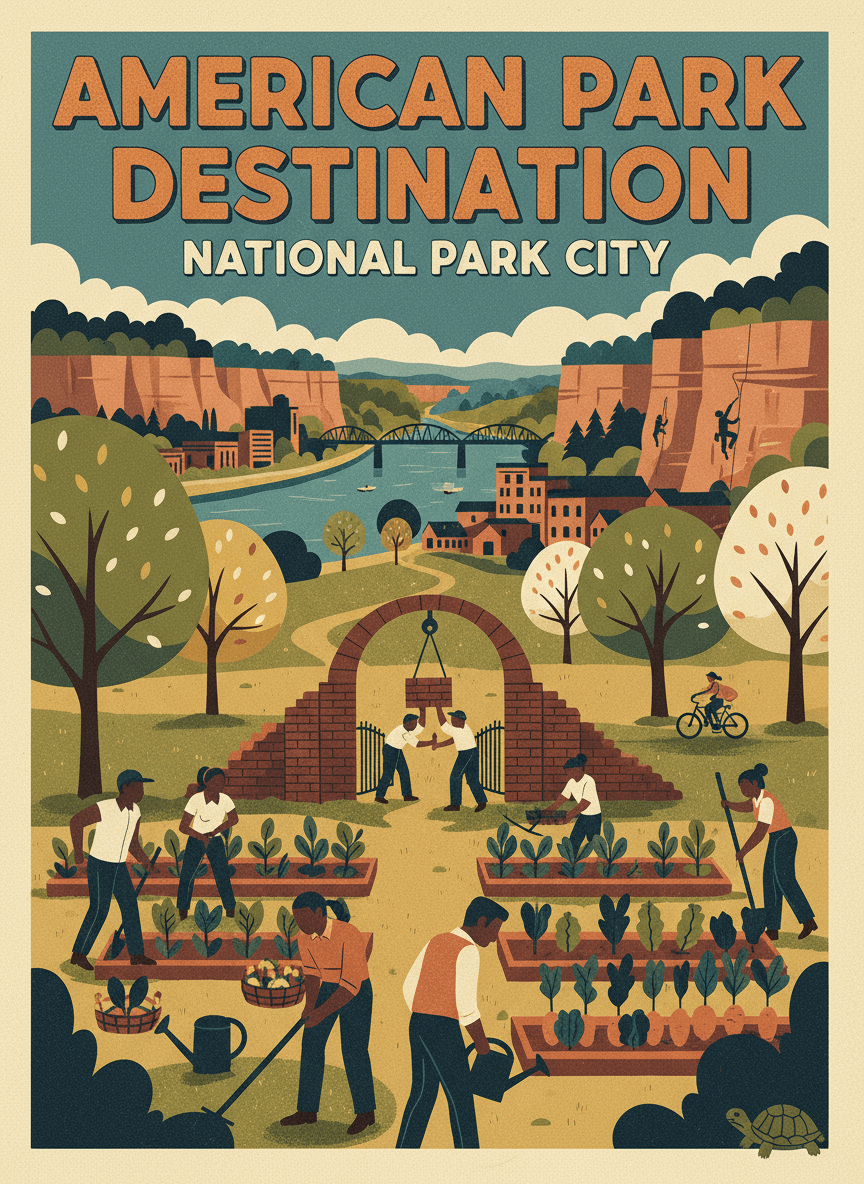
“The ultimate measure of a man is not where he stands in moments of comfort and convenience, but where he stands at times of challenge and controversy. The true neighbor will risk his position, his prestige, and even his life for the welfare of others.” - Martin Luther King Jr. A Cornerstone of Chattanooga’s Parks story: As a National Register eligible site adjacent to Erlanger and UTC, Lincoln Park offers a singular opportunity to showcase cultural heritage, community health, and youth educational programming qualities within Chattanooga’s National Park City portfolio. As a cultural landscape, it is able to express the distinctive character of Chattanooga’s peoples and historical development. It’s legacy as a center of social recreation, sport, and amusement affords a priceless opportunity to rejuvenate a premier cultural venue of ideas, invention, and civic relationship. Actions Pursued: • Oral history project research: Sourcing and disseminating historical narratives and park memories. Monthly history seminar and/or tours with partnering preservation groups • Juneteenth cultural ceremonies and Heritage Games sporting events with partnering organizations • Standing Lincoln Park community partnership with health and academic institutions, moving expertise into the real world of the community and bringing community knowledge and applications back into research environments to motivate and inform effective practice. • Community, youth-centered park restoration design and programming workshops In 1918, when Bessie Smith was singing her blues (and for good reason), Chattanooga under Mayor Jesse M. Littleton founded a park for the city’s “negroes” - Lincoln Park. Inspired by Atlanta’s inter-racial movement, land once considered for a “pesthouse” was made a place of botanical gardens and pools. It served as the recreational epicenter for colored citizens during segregation. Lincoln Park was the site, as stated by TN State Historian Carrol Van West, “…where Chattanooga blacks given a sliver of opportunity in the harsh Jim Crow times of the early 20th century built a place of recreation, sport, and identity.” A place of ingenuity: Ellis Thornhill’s amusements animated the grounds with merry-go-rounds, Ferris wheels, social events, and performing arts shows. It was a regional destination for African Americans as far as Atlanta, Birmingham, Nashville, and surrounding states. A place of excellence: LeRoy “Satchel” Paige made his professional debut for the Black Lookouts, bringing home Chattanooga’s only recorded Negro Southern League Championship in 1926/7. On his way to baseball greatness, the “Say hey kid” Willie Mays likewise debuted at Lincoln Park for the Choo Choo’s in 1946. Chattanooga’s first Women’s National Tennis Champion Wylma McGhee Reid graced the courts of Lincoln Park. A place excellent in spirit: Through the leadership of Chattanooga’s Inter-racial committee advocates, New Deal WPA funding was obtained to construct the first pool for black citizens, whom were denied entry to Warner’s “White only” pool. Community leagues and city sponsored education programs and youth camps served thousands of African American families and students throughout the 30’s, 40’s, 50’s, and early 60’s. A righteous cause, like a mighty stream, could not be refuted: Through the struggle for civil rights, African Americans would not be denied their humanity but through a content of character recast the moral arc of a nation to a larger conception of liberty and justice. Lincoln Park’s time as a segregated space was at an end. Dr. Spencer McCallie, a civic leader of the time, remarked that, “…no nation can be strong and healthy with a submerged part.” Nevertheless, in the wake of segregation’s corrosive effects, the redlining of urban renewal, the economic dislocation of integration, and recent inequitable business investments identified in the City’s 2019 disparity report, should it be surprising that communities of color find themselves struggling under economic floodwaters today? Do we hear black and blues haunting too many of our streets?.... The story of Lincoln Park is one of ingenuity and human collaboration – the original bedrock of Chattanooga’s historical development. The Coalition to Save Lincoln Park and Citico believes that its revitalization can be a powerful instrument for Chattanoogans of all colors and creeds intent on creating an environment of resilience and relationship to counter corrosive tides of an impersonal age. We here present a revitalization plan for Lincoln Park leveraging a multi-institutional collaboration to reconstitute an infrastructure of opportunity and relationship: I. Historical memory and Culture: Lincoln Park shall be a destination to recognize and honor the contributions of African Americans to Chattanooga’s historical development and culture. It speaks to the distinctive character and modes of Chattanooga’s peoples, offering a guidepost toward a future of dignity and brotherhood. II. Community health and personal development: Lincoln Park will seek partnership with health institutions to increase trust in public health among communities of color; to work to rectify AA population health deficits; and to foster positive health lifestyles and outcomes in the community. (Envisioned partners: Erlanger Hospital, UTC Health & Nursing, Hamilton County Health Dept., and community non-profits) III. Enterprise and Education: Lincoln Park will catalyze cultural heritage ventures. It shall be a nexus of entrepreneurial collaborations and educational laboratory of leadership and ideas to foster self-mastery and the creation of dynamic enterprises both social and economic. At the proposed Reid Thornhill Center, it shall leverage the expertise of partnering public and private organizations. (Envisioned partners: UTC, Chattanooga Ec. Dev., Urban League, Norfolk Southern, & local businesses) IV. Recreational and Athletic Excellence: A destination for invention, sport, and curiosity which instill a vigor of life, relationship, and character. Park design and programming to be formulated upon the genius of African Americans and the energies of local stakeholders and artisans. (Envisioned partners: UTC, Chatt Zoo, TN American Water, Chattanooga Lookouts, Aquarium) As Chattanooga endeavors to live into its ambition as America’s first National Park City, can it succeed if at the outset it fails to protect the peoples and places that have underwritten its historical development? The grounds of historic Lincoln Park and Citico reside at the heart of Chattanooga’s story of free peoples, witnessing to their travail and endurance. Recognizing that African American disinvestment degrades our city’s collective socio-economic resilience, shall not we, as Chattanoogans before, marshal against the sirens of indifference and renew a contract of brotherhood for our time?... Or as Dr. Spencer McCallie exhorted: “[Let us have]…a united front of colored and white races in making and keeping America a place of equal opportunity for any man!” In an age of increasing isolation and digital amnesia, preserving our historic sites is a defiant and creative act. Our past recalls us to who and why we are, elucidates our innate talents, and gestures toward a vision and belief for who we can and shall determine ourselves to be. Parks are about people and the dignity there to be found between neighbors. In that spirit, we ask your generous support for the revitalization of Chattanooga’s Lincoln Park. Break up with your chatbot, Choose the red pill, and Join us in reforging the real Chattanooga! Your support and belief are everything!
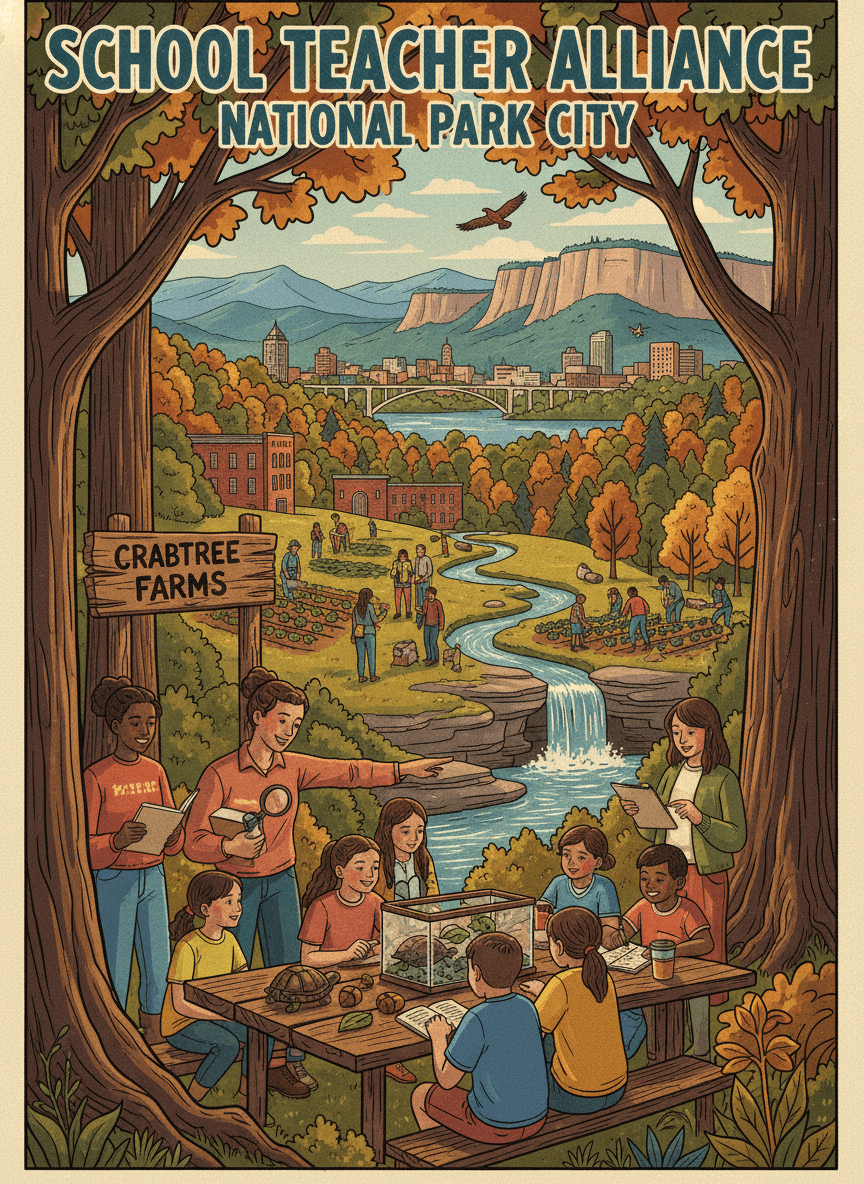
A forest school teacher training hub where local educators could access seasonal training sessions focused on forest school pedagogy. This initiative directly connects with the National Park City charter cultivating a “city in a park" mindset among our youth and enhancing the use of Chattanooga's natural assets. By equipping our local Hamilton County schools with nature-based curriculum skills, this project would be fully aligned with the city's goal of embedding nature into daily education.
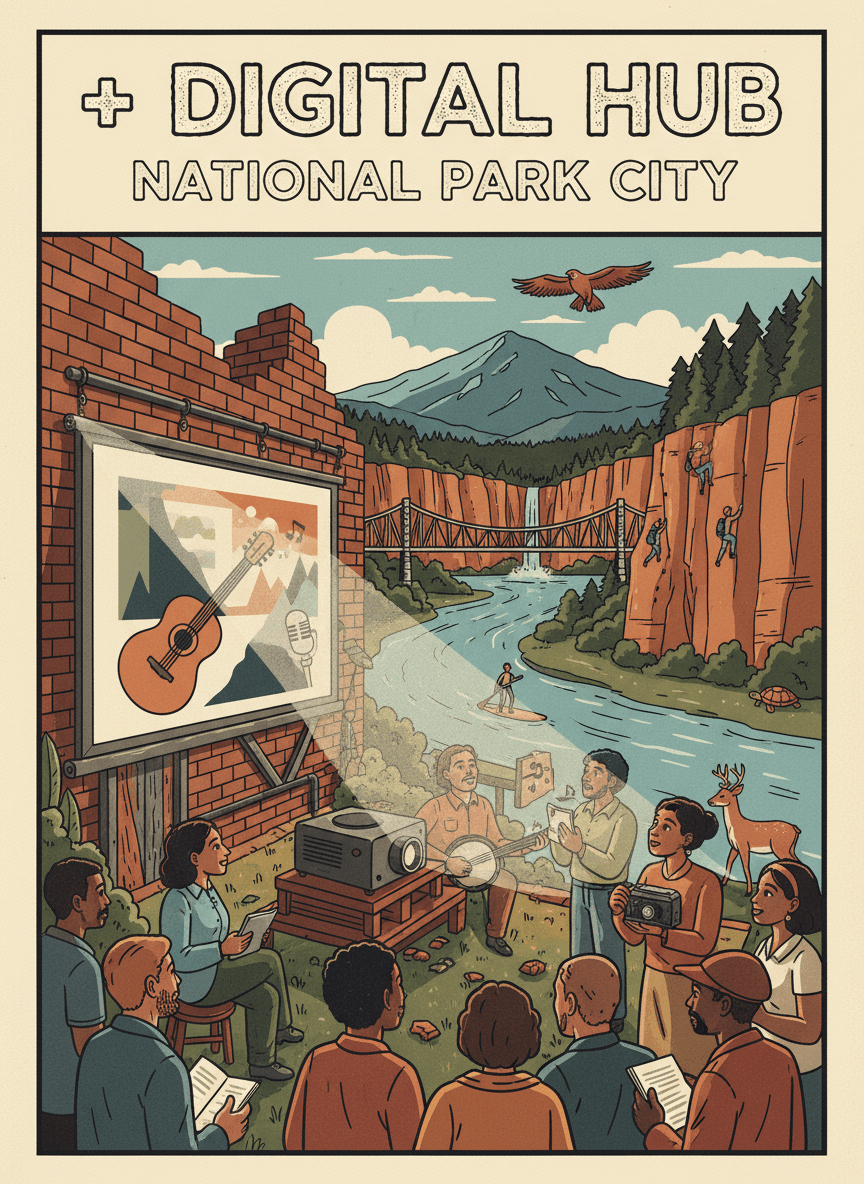
We have a wealth of good music in our city, and Chattanoogans want to know the who, what, where, and when of our local scene. We'll have a monthly digital drop of articles, videos and more, in addition to a quarterly print magazine that answers the "who" and "what" of the great sounds coming out of Chatt, both from local musicians and from bands who travel here to play at our incredible venues. We'll also send out weekly emails and a curated calendar of events so locals and visitors can know the "where" and "when" without having to deal with decision fatigue on a free evening or hunt down when something's happening. If you're into a certain genre, Hearsay can help you find it. So far we have 25+ volunteers collaborating on this project, a team of talented writers, editors, photographers, and designers who love this city and the people in it. Part of being a National Park City is being connected, and we've got a wealth of good music here. Let's tell these stories and shine a light on our friends and neighbors who are creating good art for our community.
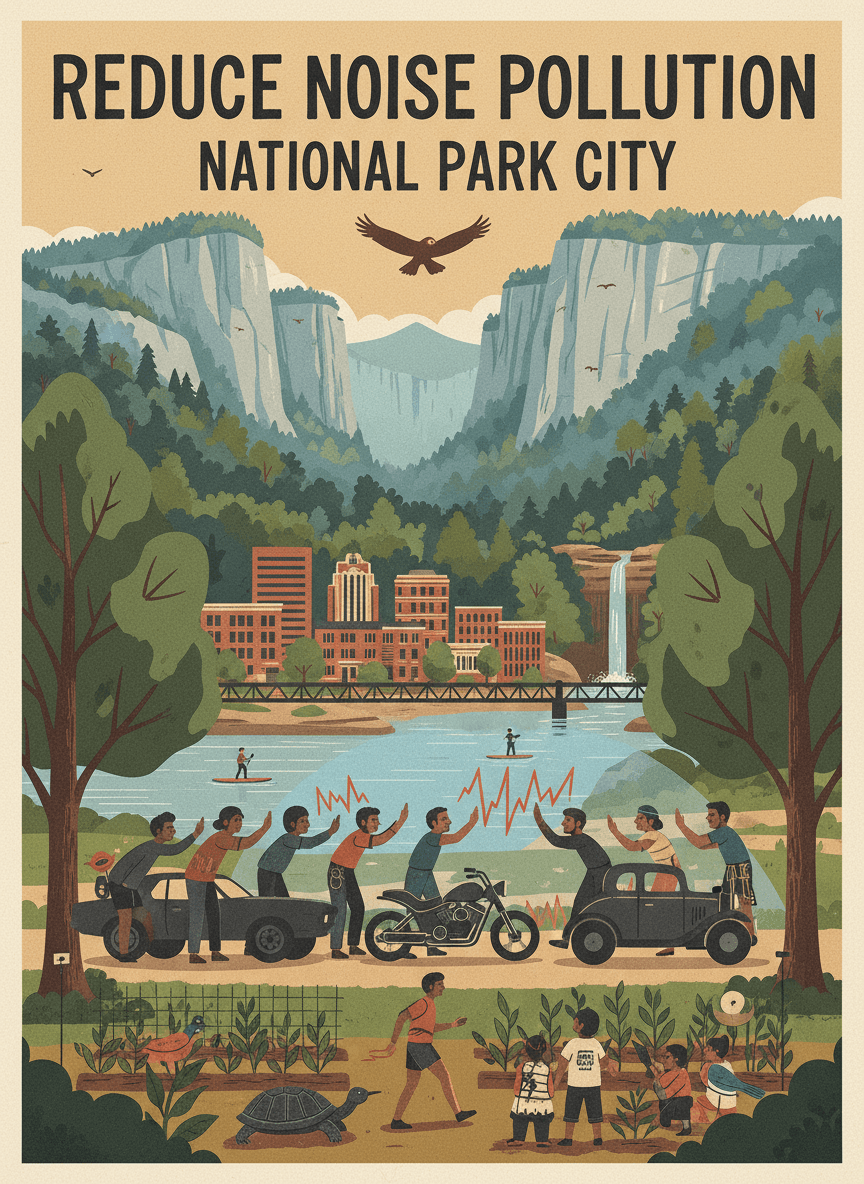
To work with local governments to amend noise ordinances that will reduce the noise pollution effecting the Chattanooga area. The beyond loud motorcycles, muffler altered cars and hot rod cars are causing vibrating high pitched levels of noise that echo off our surrounding mountains. Animals can not communicate, humans miss out enjoying entertainment in our parks or feel unsafe with extremely loud noise interruptions. Visitors, tourists and potential home buyers are opting to not invest time and money into areas where high traffic noise disturbance is a constant issue. Let’s make our National Park City a back to Nature Noise City instead of an Urban Roaring Race Track. Thank You!
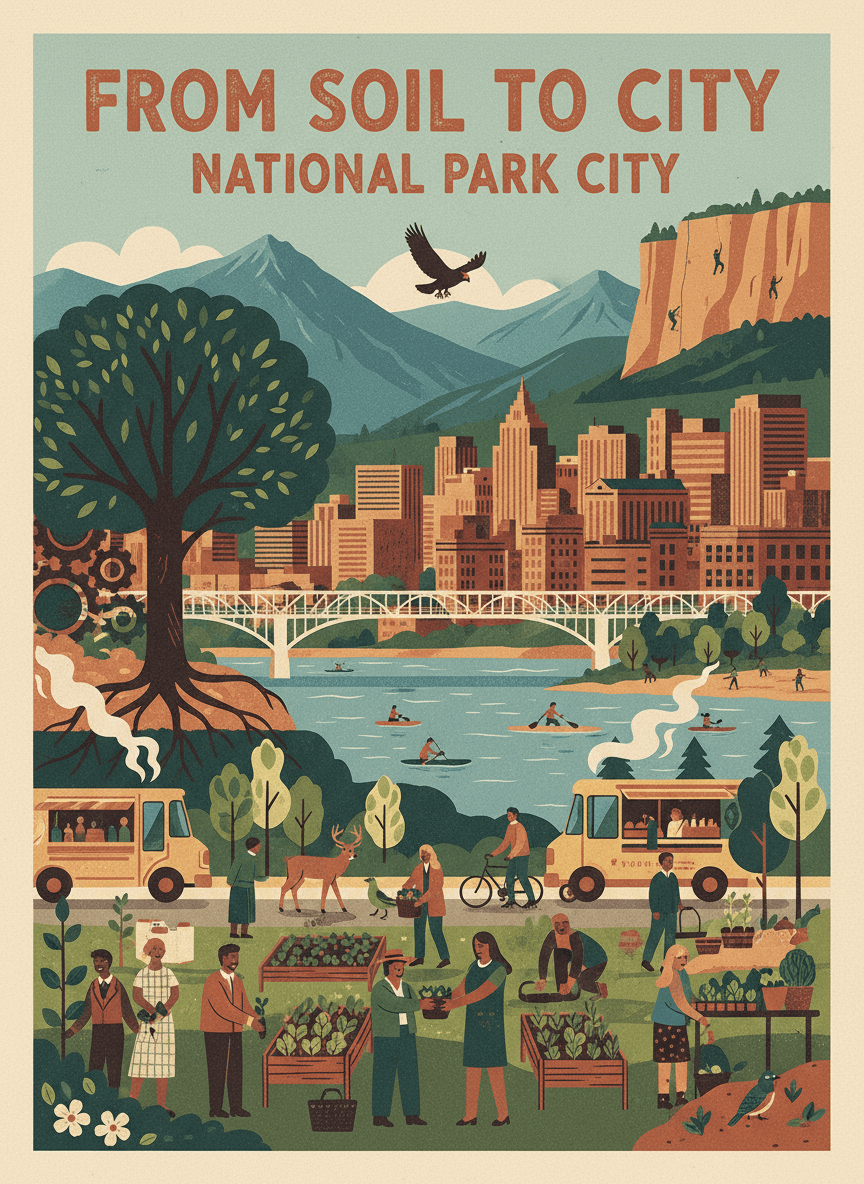
The goal of the “From Soil To City” project is to promote a better environment both socially and environmentally in Chattanooga. Maximizing the green spaces in Chattanooga, as well as promoting local businesses and farmers. The seed would begin with partnership. Partnering with local businesses and farmers to make this event a possibility. The concept of the event is to find a vacant green space in Chattanooga that we are looking to activate/transform. We will have food trucks, and local vendors there to make it a fun event for the citizens. While also, hearing from the local community to see how they think we should transform this green space to better benefit the community. I think starting with a partnership is the best way to begin, because it shows how we are basing our whole project. It will start with friendship and coming together to make something happen in the city of Chattanooga. It would begin at a chosen vacant green space and ending with lots of fun and, food, and people there to bring attention to the transformation of this area. This could be anywhere from a local garden to a concrete pad for four square. Both maximizing and promoting a better community environment. So, we can see how we can cultivate the connection in Chattanooga between the SOIL and the CITY.
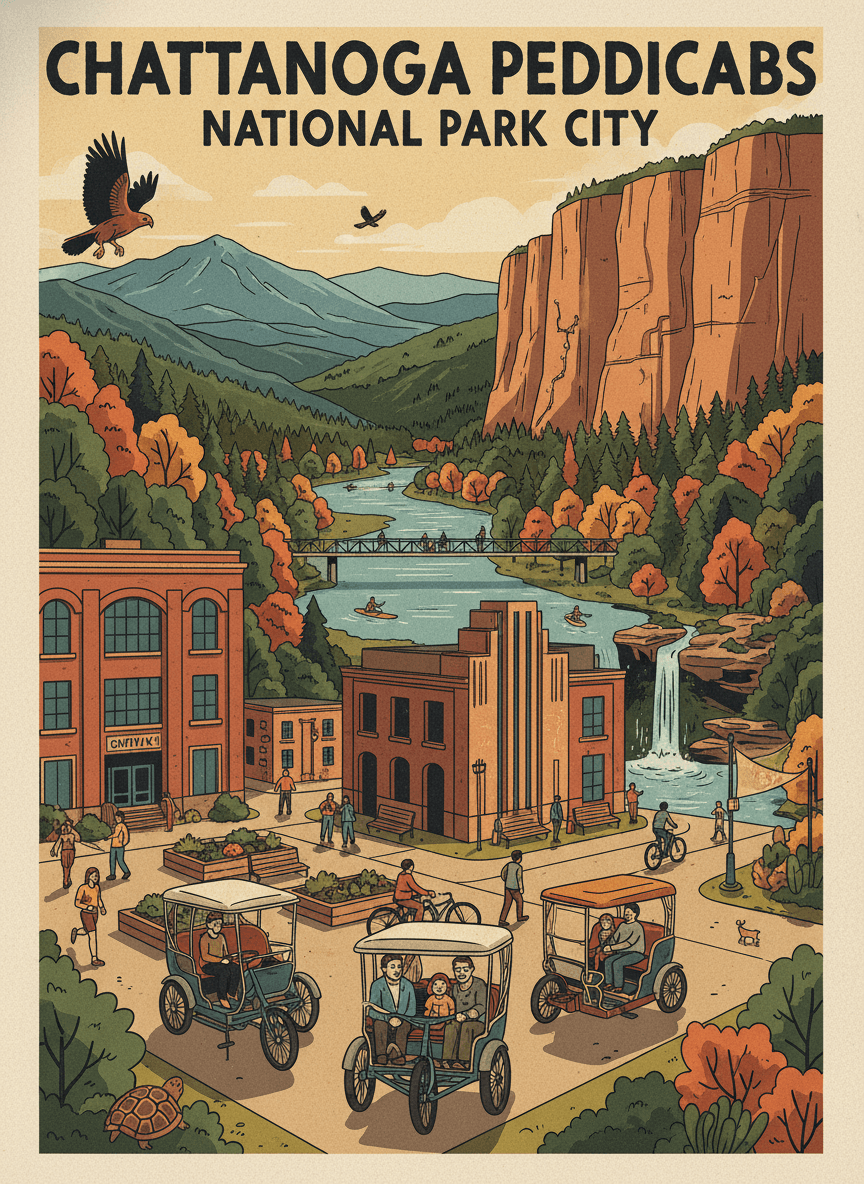
Create a space for a pedicabbing community that will stimulate the local economy and increase community engagement.
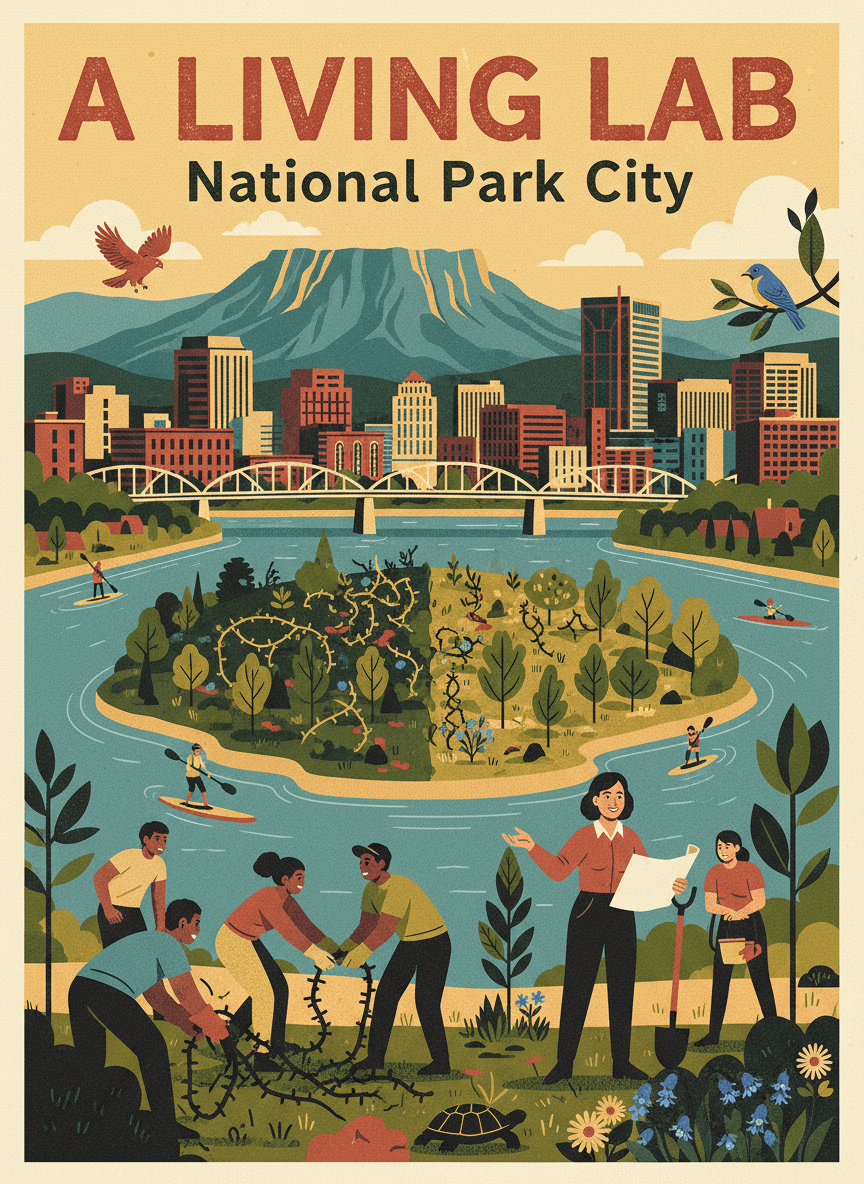
Maclellan Island, in the heart of downtown Chattanooga, is overrun with invasive species. Our goal at Chattanooga Audubon Society is to "rewild" the island and restore it to native habitat. One large problem: Our small nonprofit needs money. Is there a way we can activate the island in an economically viable way while also restoring species? Can business and biodiversity co-exist? Enter Laura Marsh, a bold visionary with a great idea. What if we study how these changes on Maclellan Island affect species biodiversity over a 10+ year stretch? We can track ecosystem changes in real time as we rewild and reimagine the island, blending conservation and commerce. The concept is simple: Conduct species surveys for birds, insects, plants, and bats every year for 10 years, starting with a baseline survey. As we reinvent and restore the island, we can see how nature responds! The goal: Find ways in which biodiversity and business can thrive together. Conducting research on an urban island is a scientist's playground. These islands are like nature’s test labs: small, contained, and just wild enough to watch ecosystems change in real time. Because they sit right in the middle of human activity, they give us a rare chance to see exactly how biodiversity responds as we shape the space around it. It gets better. Since National Park City was founded by a National Geographic Explorer, I (Laura) will apply to become a National Geographic Explorer Grant to support this long-scale research project. Connecting with National Geographic will put Chattanooga even more on the map for becoming the best outdoor city in America, and maybe even the world. It gets even better: While conducting surveys, extra participants will be welcome. This could look like Title 1 students who want an opportunity to gain real world biology experience. Or underserved communities who wouldn't otherwise get out in nature. Or perhaps kids and families want a chance to do hands on science. Or even "research tourism" in which participants learn about our work and want to donate back to nonprofits. We want to reach as many communities as possible! Chattanooga has a unique opportunity to capitalize on a global rewilding and urban ecology movement. After all, what city has an island used for ecological research right in the heart of downtown?
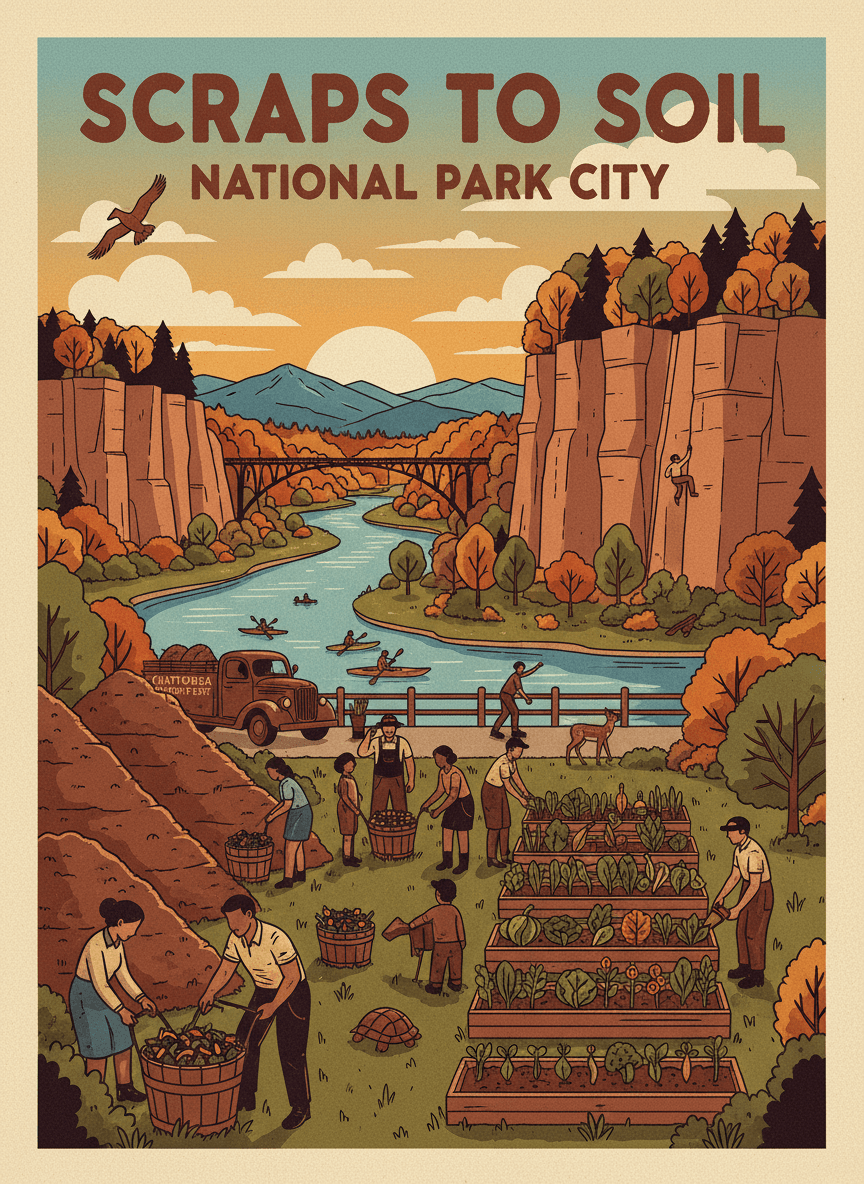
Scenic City Scraps to Soil is a targeted, high-impact initiative designed to bring zero-waste practices into Chattanooga’s most visible tourism and hospitality hubs. Chattanooga has built a national reputation as the Scenic City, a destination defined by outdoor access, environmental stewardship, and a thriving tourism economy. However, a significant portion of waste generated by high-traffic hospitality destinations still goes to landfills, particularly food waste and single-use plastic products. We currently partner with established sustainability leaders like the Tennessee Aquarium, the Chattanooga Zoo, Clumpies, the Creative Discovery Museum, Marriott Chattanooga Downtown, Rock City, and Ruby Falls. By focusing on popular tourism locations such as the Chattanooga Choo Choo, the Chattanooga Convention Center, the Chattanooga Lookouts Stadium, the Hunter Museum of American Art, and the National Medal of Honor Heritage Center, we can create a scalable and replicable model for zero-waste tourism across an even larger network of destinations. Tourism is one of Chattanooga’s strongest economic drivers, drawing visitors from across the tri-state region and beyond. However, the current visitor experience does not fully reflect the city’s environmental values at a systems level. Scraps to Soil positions Chattanooga as a leader in zero-waste, educational tourism in the Southeast, where sustainability can easily be embedded in everyday experiences such as dining, events, and attractions. By normalizing composting in public spaces, we see significant potential for a ripple effect across the local hospitality sector. Furthermore, greater adoption of composting practices in this sector strengthens the alignment between the National Park City brand and its operations across local culture, shared behavior, and our very own soil ecology. This initiative also directly supports the State of Tennessee's goal of achieving a 25 percent regional waste diversion rate for the Southeast region (Southeast Tennessee Development District 2026). This benchmark for diversion includes food waste and organics sent for composting, yard waste and land clearing debris, pre- and post- consumer food scraps, and other biodegradable materials processed for beneficial reuse. The material collected and processed through Scraps to Soil will make a measurable contribution toward regional compliance and long term sustainability. Dollar for dollar, composting is the most effective practice for reducing environmental impact. Through this Seed, NewTerra aims to remove key barriers to zero-waste adoption by providing subsidized composting service for the listed high-impact generators, as well as optional support for transitioning to compostable products in back-of-house operations in the tourism sector. We provide on-site training and implementation guidance for staff, and data tracking and reporting to quantify diversion impacts. We take pride in our model, with superb member satisfaction and retention since the company began in 2020. We aim for participation to be easy, affordable, and operationally seamless, never an added burden. Scenic City Scraps to Soil is designed as a launchpad rather than a one-time program. Expected outcomes across a 12-month period of composting include a significant increase in diverted organic material contributing to the 25 percent regional goal; the adoption of composting and compostable systems across up to ten major tourism entities; the creation of a replicable implementation model for future expansion; and strengthened partnerships between private businesses, the City, and regional waste infrastructure. We are confident in our ability to scale, and readily have the capacity for implementation. By demonstrating zero-waste success in Chattanooga’s most visible spaces, we lay the groundwork for broader policy adoption, expanded service coverage, and a citywide shift toward zero-waste systems. We strongly believe in a Chattanooga where food waste becomes soil, tourism supports sustainability goals, and the Scenic City lives up to its name from trailhead to tabletop.
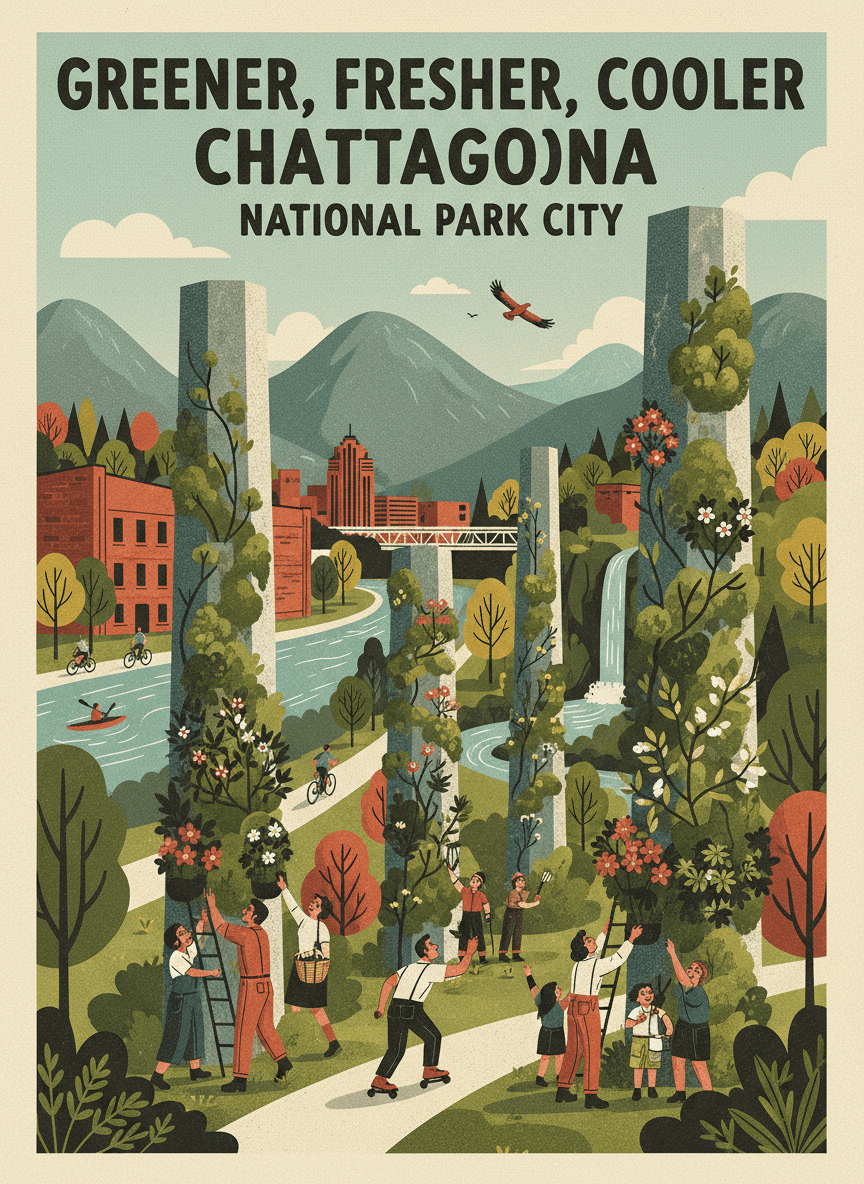
Imagine transforming Chattanooga’s concrete highway corridors into living, breathing green infrastructure. Inspired by Mexico City’s Via Verde project, this initiative would convert highway pillars throughout the city into vertical gardens—turning underused gray surfaces into vibrant environmental assets. Helping to combat air pollution, noise pollution, the urban heat island effect, and water runoff issues in the Chattanooga area. Using climate appropriate moss and ferns.
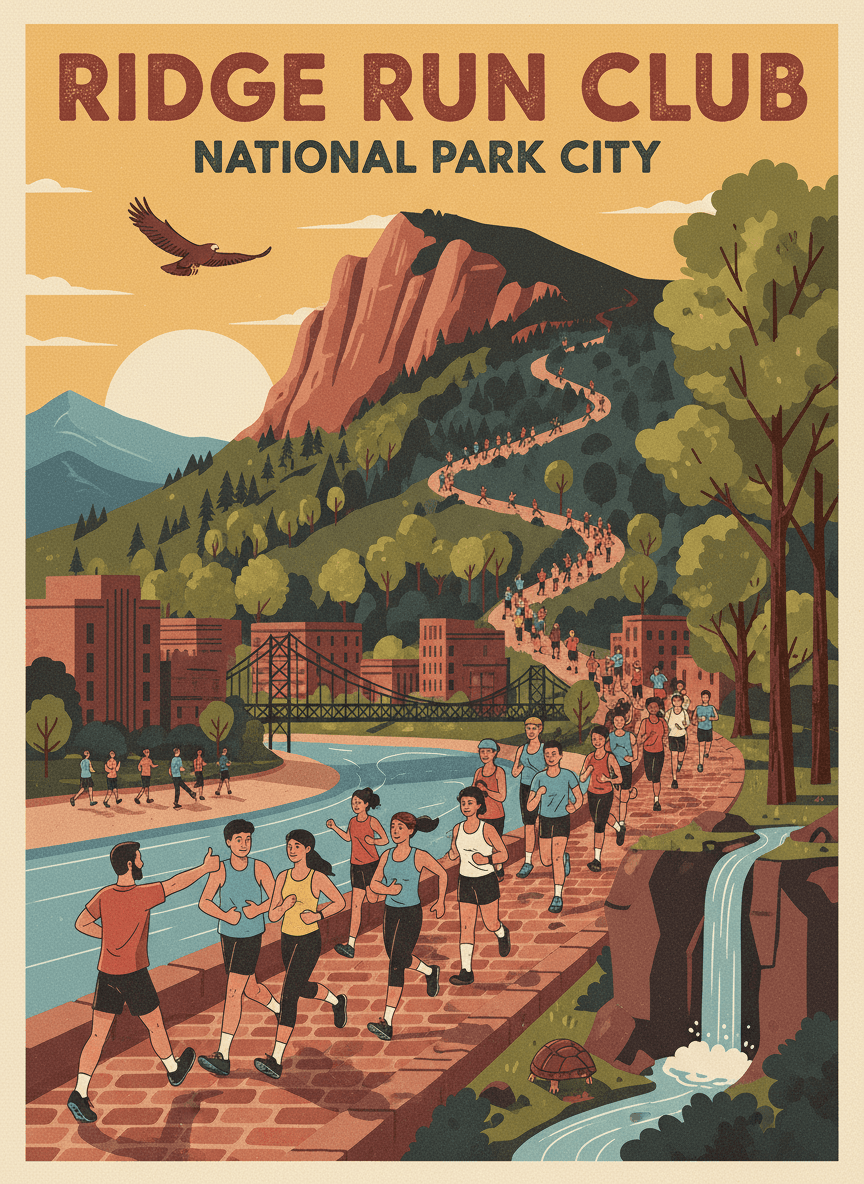
River to Ridge run club will be a community running club, focused on bringing people together and building a community through running in the outdoors, for all paces and levels. My goal is to create a welcoming community to get people outside and to see all of the places in Chattanooga to spend time outside doing something that I personally love so much. The project would be located in Chattanooga in areas that would get a lot of people there, such as areas like the riverwalk, Coolidge Park, Sterchi Farms, the battlefield, and other places that Chattanooga has created for people to accessible places in Chattanooga to get outside. The category of this project would be connected communities because it is focused on building a community and bringing people of all skill levels together in the Chattanooga area, while also promoting everyday access to the outdoors.
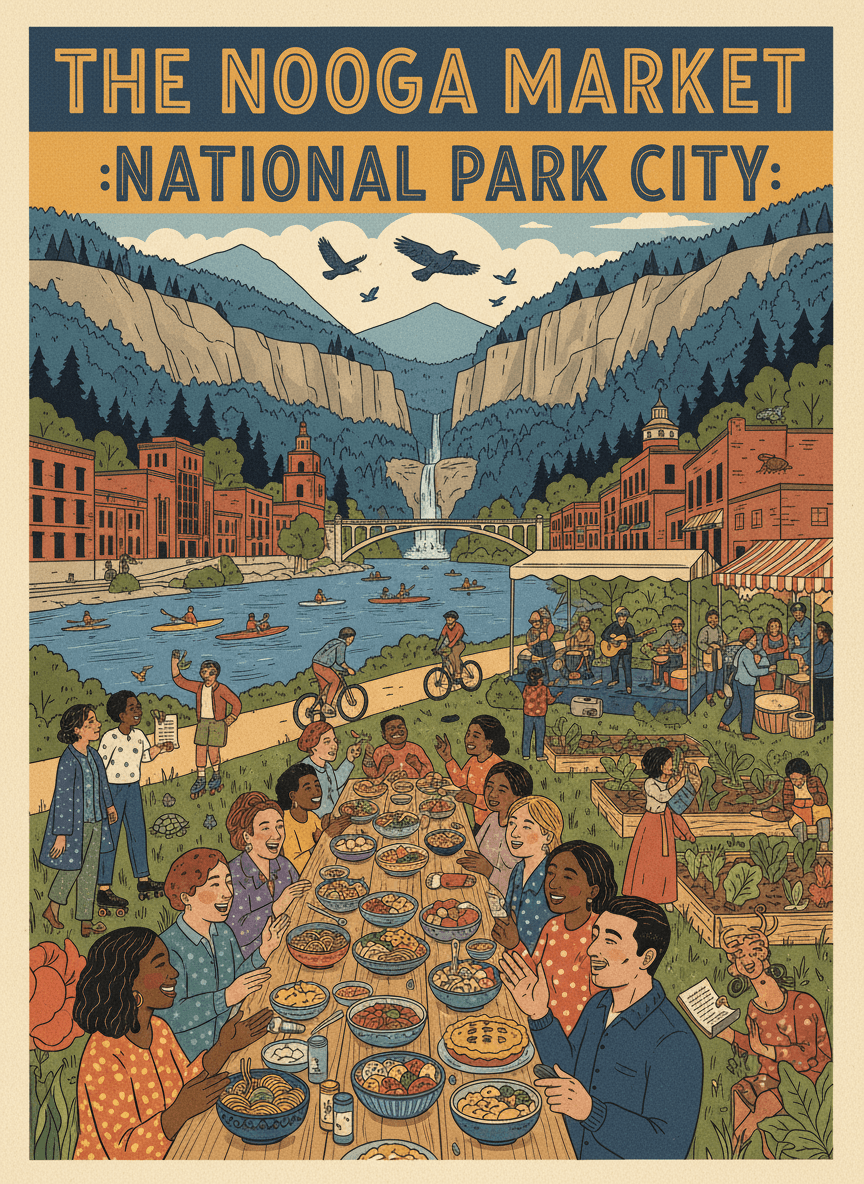
The name for our project is Nooga Market! Our project is based on bringing people in the Chattanooga area together to share different cultures, including Asian, African, Western, and Latin cultures. This project is really focusing on bringing the community together to have some fun while talking in the beautiful national park. Nooga Market will not only be about bringing culture to Chattanooga, but also about people sharing their stories and seeing people from all different backgrounds come together in one space. Nooga Market will dedicate bringing in small businesses from all kinds of cultures and backgrounds. We connected our project to the category of connecting communities. Not only will the community of Chattanooga benefit from this, but also the small businesses around Chattanooga. These businesses will experience more exposure and revenue. We want our community to be more aware of these small businesses and to take advantage of what they offer. We really wanted to bring more awareness of the different cultures in Chattanooga, especially since we both come from such diverse backgrounds. We wanted to give others the chance to share their own culture and stories with the community. This project is community-led, with some small businesses involved. We wanted to include small businesses so it would give our community a chance to grow and acknowledge the little things that may be missed. The businesses we have decided to include are Southern Squeeze, Spice and Tea Exchange, Scoop around the Ice cream bar, and Bread & Butter. All of these businesses will either provide a fun night or a more in-depth background of a culture. Another big part of Nooga Market is creating a space where people feel comfortable sharing and learning with each other. We want our market to feel like an unforgettable experience where people can try new foods, communicate with others, and be exposed to new traditions. By doing this, we hope to break barriers between different cultures and build respect for groups in Chattanooga. This project is important to us because it gives us a chance to learn, reflect, connect, and appreciate the community around us. As Chattanooga progresses, and with that comes growth, and we want to grow with this city. We want to grow Chattanooga's culture and small businesses. This is why Nooga Market will give the community growth and change that we have been looking for. We know our idea has what it takes, and with the help of the vendors and small businesses, we know our idea will succeed. We would use the park as the event space, and people would hear about it through social media, school announcements, and our community school partnerships. Nooga Market will not just be another place that is overlooked; it will be a place where everyone can have a voice and a chance to grow.
The Tennessee River Gorge is a 27-mile winding river canyon with over 24,000 acres of conserved land! The Tennessee River Gorge Trust (TRGT) is working to protect additional lands in the gorge while also focusing on improving already protected lands. Within the already protected lands are degraded habitats that are in need of active restoration to maintain ecosystem function, resiliency, and provide habitat for our most imperiled wildlife species. TRGT has selected 5 degraded sites to begin long-term restoration efforts. These efforts aim to restore imperiled ecosystems, promote biodiversity, and provide habitat for rare and threatened species. These sites include the Aetna Mountain Bogs, a butterfly meadow at Pot Point, a remnant shortleaf pine forest along Cash Canyon, Williams Island grasslands, and an erosion site atop Aetna Mountain. Alongside partners like the Southeastern Grasslands Institute, the group hopes to ensure these important habitats can thrive for generations to come. Some of these sites are home to plants and wildlife species that only occur in a handful of places in the state!
Williams Island is a 450-acre island at the gateway of the Tennessee River Gorge. For over 10,000 years, humans have been interacting with this unique space. Currently, there is a free, public campground on the island managed by the Tennessee River Gorge Trust. The Tennessee River Gorge Trust team is also working to create a 2-mile loop trail that takes visitors around the island to a future grassland restoration site, a scenic vista into the Tennessee River Gorge, wildlife viewing area by a large wetland, and informational kiosks. The trail system has been designed by TRGT in partnership with the Eastern Band of the Cherokee, Tennessee Division of Archaeology, Muscogee Creek Nation. We are close to meeting our fundraising goal to construct the trail system and renovate the campground over the summer of 2026!